On growing up middle class, the psychology of money, and why a piece of bread with butter and garlic means more to me than it probably should.
When I was a kid, plain naan cost Rs. 10. Butter naan cost Rs. 12.
And in our household, those two rupees mattered.
Not because we were necessarily counting every rupee before walking into a restaurant, but because that's how middle-class Indian families were wired in the 1990s. You didn't spend extra unless there was a bloody good reason.
Why pay Rs. 2 more for a little butter smeared on a naan? Was the plain one somehow less capable of doing its job? Was butter suddenly a luxury item?
No. You ordered plain naan.
It was perfectly good. It filled your stomach. It did everything naan was supposed to do. What more could you possibly want?
This was the economics of my childhood. Spend carefully. Don't waste. Don't get carried away. And, above all, don't confuse wanting something with needing it.
I don't remember anyone explicitly teaching me these lessons. They were simply absorbed. Through restaurant menus, grocery bills, conversations about prices and the occasional parental expression that could make you reconsider an entire purchase.
Money was not just money. It was security. It was effort. It was the number of hours someone had worked to bring it home.
And spending it unnecessarily was almost disrespectful to that effort.
So, for years, I ate plain naan.
The first time I ordered garlic naan
I started earning. Slowly, my relationship with money began to change.
Not overnight. Not dramatically. There was no moment when I woke up and discovered that I had become financially independent. There were salaries, expenses, savings, compromises, occasional mistakes and the usual adult business of wondering where the money went.
But one evening, sitting in a restaurant, I looked at the menu and ordered garlic naan. With my own money.
I know. Hardly the stuff of inspirational cinema.
But I remember the feeling.
There was something deeply satisfying about not having to negotiate with myself over a couple of rupees. About looking at something I wanted and simply ordering it.
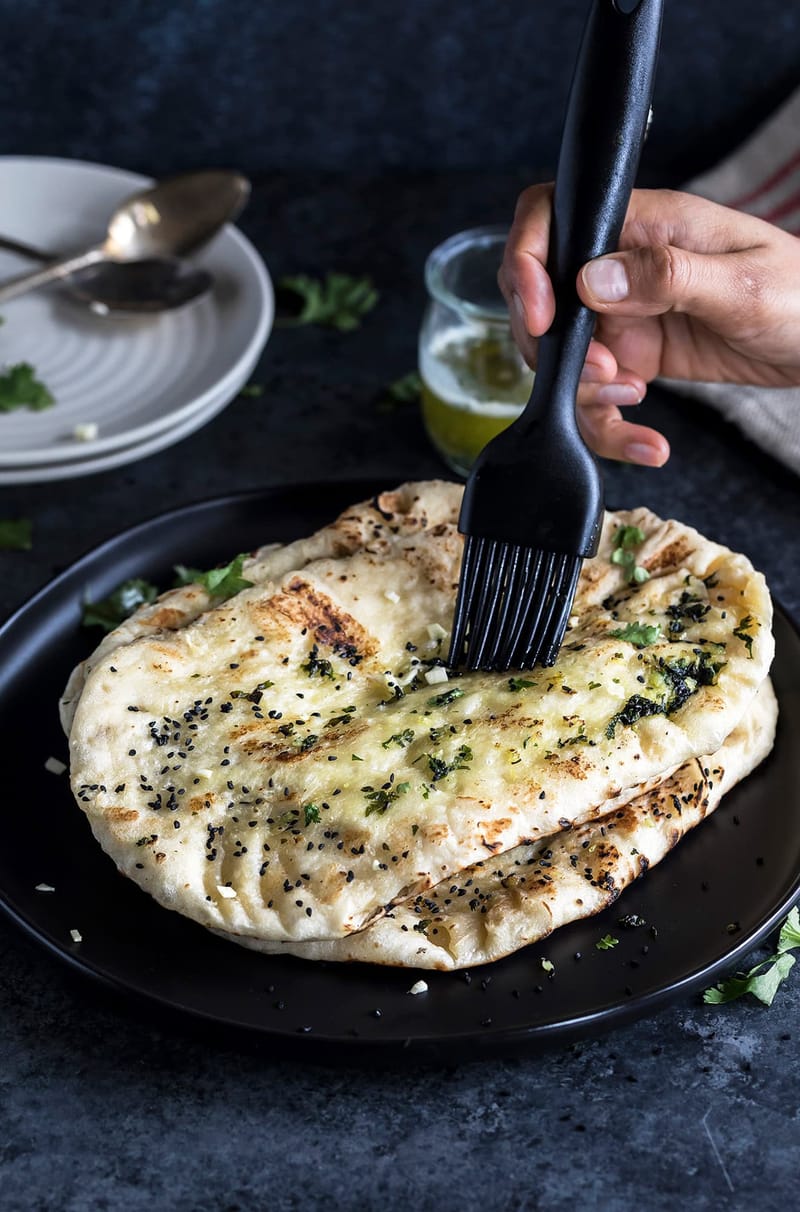
The naan arrived. Warm, buttery, covered in little pieces of garlic.
And I loved it.
Not just because it tasted better than plain naan. But because, in that small moment, I was doing something the younger version of me had never really considered an option.
I was indulging myself.
I had earned the right to make a small, unnecessary choice.
And I didn't have to explain it to anyone.
Then came my sister
Naturally, I introduced my sister to garlic naan.
I offered her some, and she liked it. Quite a lot, actually.
And somewhere along the way, the family upgraded.
The people who had once considered two extra rupees for butter an avoidable expense were now ordering garlic naan without much discussion.
It became our default.
I find this transition strangely moving.
There was no announcement. No family declaration that we had finally made it. No ceremonial retirement of the plain naan.
We just started choosing differently.
And perhaps that's how progress often works. Not through grand declarations, but through small changes in what you allow yourself to enjoy.
I sometimes wonder what my younger self would make of this. The boy who thought butter naan was an unnecessary extravagance, watching the entire family casually order garlic naan.
He'd probably be impressed.
He might also suspect that we've all become financially irresponsible.
The money you earn isn't always the money you feel you have
Here's something I've realised over the years.
Your income can change dramatically, but your relationship with money doesn't necessarily catch up.
You can start earning well and still feel guilty buying something nice for yourself. You can have savings in the bank and instinctively choose the cheaper option. You can afford a comfortable holiday and spend half the trip wondering whether you should have booked the less expensive hotel.
The child who grew up hearing that money doesn't grow on trees becomes an adult who continues behaving as though every discretionary purchase requires parliamentary approval.
And it's not always a bad thing.
That middle-class conditioning gave many of us discipline. It taught us to save, plan, distinguish between wants and needs and appreciate the effort behind every purchase.
But it can also make you suspicious of pleasure.
You start believing that spending on yourself needs justification. That enjoying something is acceptable only after every other responsibility has been taken care of.
The problem is that there will always be another responsibility.
Another bill. Another investment. Another financial goal. Another reason to postpone enjoying the money you've worked so hard to earn.
You can spend your entire life preparing for a future in which you finally allow yourself to live.
And that's a rather depressing way to grow old.
Financial freedom isn't always a number
We talk about financial freedom in terms of net worth, investments, passive income, retirement plans and the ability to stop working.
All important. All necessary.
But I think there's another dimension to it that we don't discuss enough.
The freedom to make small choices without anxiety.
To take your parents out for dinner and not mentally calculate the cost of every dish.
To buy your sister something she likes without wondering whether it's an unnecessary expense.
To replace something that's broken rather than spending weeks trying to squeeze another year out of it.
To order what you want from a menu without feeling guilty about the difference in price.
These aren't extravagant ambitions. They're ordinary freedoms. But for someone who grew up associating money with caution and compromise, they can mean a great deal.
For me, garlic naan has become a rather ridiculous symbol of this journey.
It represents nearly twenty years of working, earning, saving, making mistakes and gradually building a life in which I have more control over my choices.
It represents the distance between the child who couldn't justify spending Rs. 2 extra and the adult who can order something simply because he enjoys it.
And, perhaps more importantly, it represents being able to share that little indulgence with the people I love.
For the love of garlic naan
I don't know when our family officially stopped ordering plain naan. I doubt anyone remembers.
But every time garlic naan arrives at the table, I find myself thinking about those old menus. Rs. 10 for plain naan. Rs. 12 for butter naan.
Such a small difference. Such a large distance between the two versions of me.
I suppose this is what twenty years of financial progress can sometimes look like. Not a luxury car, not a sprawling house, not an impressive investment portfolio.
Just sitting across a table with your family, ordering the thing you genuinely enjoy, and knowing that you don't have to think twice about it.
And I hope the younger version of me would understand that.
The point was never really the butter. Or the garlic.
It was getting to a place where a small pleasure didn't have to compete with a hundred practical considerations before it could be enjoyed.
We spend so much of our lives earning money so that one day we can have choices. It would be a shame to spend the rest of our lives feeling guilty about exercising them.
So here's to the plain-naan childhood, the garlic-naan adulthood and the people who made both possible.
For the love of garlic naan, may we all get to enjoy a little more of what we worked so hard for.
And may we remember that sometimes, making it in life is simply being able to order the extra butter with a sprinkle of roasted garlic.