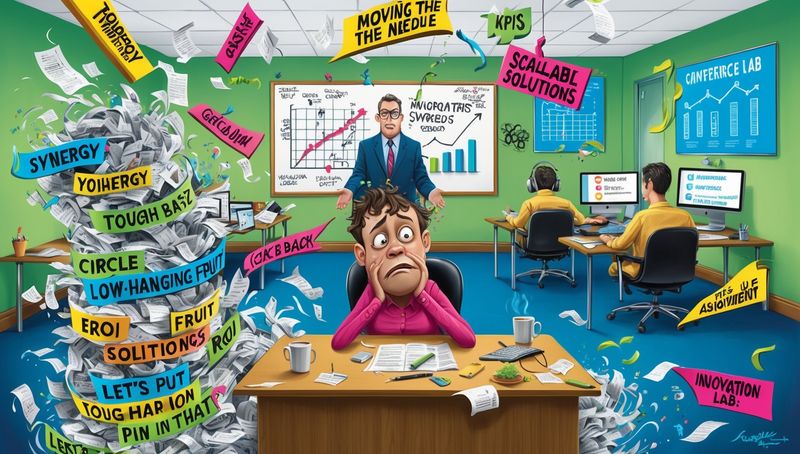

The Indian middle class wants the privileges of a global citizen, the insulation of a gated community, and the moral convenience of pretending none of it has anything to do with politics.
There is something deeply Indian about spending ₹15,000 on an air purifier to survive the air outside your apartment and then declaring yourself apolitical.
You will buy an RO water purifier because the municipal water supply is suspect. You will pay for private health insurance because the public healthcare system makes you nervous. You will buy an SUV because Indian roads have apparently evolved into an extreme sport. You will send your children to private schools, pay for private coaching, subscribe to international streaming platforms, invest in global markets and work for multinational corporations.
You will build a private little republic inside the Republic of India. And then, with a straight face, you will say: I don't follow politics. I just focus on my career.
Congratulations. You have successfully converted citizenship into a subscription service.
The great aspiration of the Indian middle class is no longer simply to escape poverty. It is to escape India while continuing to live in it. Not necessarily through emigration, although that remains the preferred premium package for those who can afford it, but through a thousand smaller acts of withdrawal. A better water filter. A better school. A better hospital. A better neighbourhood. A better passport. A better portfolio diversified away from the place where its owner earns a living.
And, of course, better news.
The news consumed by this class is increasingly global in its imagination. It can discuss American elections, Silicon Valley layoffs, European immigration debates, Chinese manufacturing, geopolitical realignments and the latest crisis at some international financial institution. It can explain the Federal Reserve's interest-rate decisions over brunch.
Ask it about municipal budgets, groundwater depletion, local government accountability or why its city floods every monsoon, and the conversation suddenly acquires the intellectual depth of a corporate townhall.
Why does everything have to be political?
Because everything already is.
The question is not whether politics enters your life. It is whether you have enough money to make its entry less visible.
The Great De-Statification
Let's call this what it is: the de-statification of the Indian middle class.
Not de-nationalisation, exactly. The national flag still looks wonderful on Independence Day. Cricket matches still produce extraordinary quantities of patriotic emotion. The occasional military spectacle can bring the entire WhatsApp ecosystem to tears.
This is not a population that has stopped feeling Indian.
It is something more complicated, and perhaps more troubling.
It is a population that increasingly wants to experience India as an identity while experiencing the state as an inconvenience.
It wants the emotional rewards of belonging without the practical obligations of participation. It wants the economy to grow, the currency to behave, the stock market to rally and the passport to acquire greater mobility. But it would prefer not to think too hard about who maintains the roads, regulates the air, funds the schools, staffs the hospitals or decides whether the neighbourhood gets a functioning drainage system.
The state, in this imagination, should be like the electricity supply: invisible when it works, unforgivable when it doesn't.
And the middle class has become remarkably good at making it invisible.
When the public water supply fails, buy a purifier. When government hospitals disappoint, buy insurance. When public education fails, pay for private schooling. When public transport is inadequate, buy a car. When the air becomes poisonous, buy a machine that cleans the air in your bedroom.
Notice the pattern.
Every collective failure is converted into an individual purchasing decision.
A problem that should provoke a political question instead generates a shopping list.
The genius of this arrangement is that it allows a citizen to experience institutional failure without necessarily confronting its institutional causes. The market offers a private workaround. The workaround reduces immediate discomfort. The discomfort that might otherwise have become public anger is contained within the household budget.
Of course, private solutions are not inherently bad. A family buying health insurance is not betraying democracy. A parent choosing a better school is not morally obliged to sacrifice their child to a dysfunctional institution. Nobody should be expected to inhale toxic air as an act of civic solidarity.
The problem begins when the workaround becomes the worldview.
When you stop asking why the public system has failed because you have found a way to survive its failure, you have not solved the problem. You have merely changed your relationship with it.
And when enough people do this, the political cost of institutional failure becomes easier to distribute among those least able to escape it.
The affluent buy insulation.
Everyone else gets the weather.
The data behind the detachment
This is not merely a question of attitude. India's public infrastructure and electoral participation offer a useful window into the contradiction.
Consider the 2024 Lok Sabha elections. According to the Election Commission of India, overall voter turnout was 66.10 per cent, down from 67.40 per cent in 2019. In other words, despite the enormous spectacle surrounding the election, roughly one in three registered electors did not cast a vote.
The urban picture was particularly striking.
Bengaluru's three parliamentary constituencies recorded turnout of approximately 53 to 54 per cent. Mumbai South recorded 51.59 per cent. Pune recorded just 49.89 per cent. These figures are not proof that every abstaining voter was affluent, professionally employed or deliberately apolitical. Turnout is affected by multiple factors, including electoral rolls, migration, polling logistics and the accessibility of voting facilities.
But the pattern is difficult to ignore: several major urban constituencies, including centres of professional employment and economic activity, recorded turnout well below the national average.
This matters because cities are where the contradictions of the Indian development story are most concentrated.
They are engines of economic growth, magnets for global capital and home to an expanding professional class. They are also places where air pollution, unreliable public transport, flooding, water stress and inadequate urban planning routinely collide with private wealth.
The people most capable of understanding these problems are often the people best positioned to purchase their way around them.
And that is where the political problem begins.
A city can be economically sophisticated and civically anaemic at the same time. It can produce software engineers, financial analysts, startup founders and global executives while struggling to persuade a substantial share of its electorate to participate in choosing the people responsible for governing it.
We have mistaken professional competence for civic competence.
The two are not the same.
Being able to optimise a supply chain does not mean you understand the politics of public procurement. Being able to manage a multinational team's quarterly targets does not mean you understand municipal finance. Being able to build a successful career in a global economy does not automatically equip you to think critically about the institutions that make that career possible.
And being a good employee is not the same thing as being a good citizen.
In fact, the habits that make someone successful in a corporation can sometimes make them spectacularly comfortable with political disengagement: defer to authority, avoid unnecessary conflict, focus on measurable outcomes, don't rock the boat, protect your career.
The trouble is that a democracy is not a performance review.
You cannot outsource accountability to your manager, your employer or a particularly articulate television anchor.
The good kids of the Republic
There is a peculiar moral hierarchy in the Indian middle class.
The ideal citizen is the good kid.
The good kid studies hard, gets into a respectable college, secures a well-paying job, pays their EMIs, invests sensibly, avoids controversy and does not get involved in those messy political things.
The good kid is disciplined. Ambitious. Productive.
Above all, the good kid does not make trouble.
A student protesting a fee hike is being disruptive. A worker demanding better conditions is being unreasonable. A citizen questioning a government policy is being negative. A journalist investigating corruption is being partisan. An artist commenting on political events is being preachy.
Everyone has apparently agreed that the highest form of citizenship is to become so personally successful that the condition of the society around you becomes somebody else's problem.
This is a remarkably convenient definition of maturity.
It also explains why so much of the Indian middle class treats political engagement as an embarrassing adolescent phase — something one is expected to grow out of once one acquires a salary, a mortgage and a respectable LinkedIn profile.
The implication is that politics belongs to people who have failed to develop more interesting lives.
But this idea collapses the moment you examine what politics actually does.
A government's education policy affects your child's school. Its labour policies affect your employment. Its environmental regulations affect the air you breathe. Its urban planning decisions affect your commute, property values and exposure to flooding. Its taxation and spending decisions shape the economy in which you invest.
Even your apparently private choices exist within a structure of public decisions.
There is no clean boundary between your career and politics, between your savings and politics, between your health and politics.
There is only the comforting illusion that your individual success has made you independent of the collective arrangements surrounding it.
And that illusion is particularly seductive when the arrangements are failing other people first.
The good kid does not need to be cruel. They simply need to believe that their own escape route is evidence that escape was always possible.
If I got into a good school, why didn't you study harder?
If I bought a flat in a gated community, why didn't you plan your finances better?
If I have health insurance, why should I worry about public hospitals?
If I can afford an air purifier, why should I be responsible for the air outside?
At some point, individual achievement becomes a moral alibi for collective abandonment.
That is when meritocracy stops being an aspiration and becomes a remarkably efficient way to avoid looking out of the window.
The trauma of not wanting to know
But I wonder if there is something deeper going on here.
What if this withdrawal is not entirely indifference? What if some of it is a response to prolonged disappointment — a kind of learned helplessness in which the citizen begins to experience public life as a sequence of injuries they cannot meaningfully prevent?
Consider the emotional logic.
You complain about the road. Nothing happens.
You complain about the pollution. Nothing meaningful changes.
You watch institutions fail, public discourse deteriorate and accountability become a partisan performance. You discover that asking questions can be exhausting, that the answers are often unsatisfactory and that outrage has a short shelf life in a country where the next outrage arrives before the previous one has been metabolised.
Eventually, disengagement begins to look like self-preservation.
You stop watching the news because it makes you miserable. You stop following politics because you cannot bear the arguments. You stop expecting institutions to work because disappointment has become more familiar than competence.
You focus on your career. Your family. Your investments. The renovation of your apartment. The next holiday.
You curate a life in which the country can be kept at a manageable emotional distance.
And perhaps, somewhere along the way, you start calling that distance neutrality.
There is a psychological concept worth considering here: learned helplessness, associated with research by Martin Seligman and Steven Maier. Broadly, it describes how repeated exposure to circumstances perceived as uncontrollable can undermine the expectation that one's actions will make a difference.
It is not a diagnosis of the Indian middle class, and it does not establish why any particular person avoids politics. But it offers one possible lens through which to understand the retreat from public life.
When people repeatedly experience their actions as ineffective, withdrawal can become psychologically understandable.
The important distinction is that understandable does not mean harmless.
And we should be careful about going further than the evidence permits. Comparing political disengagement to the denial or dissociation that can occur after sexual violence may capture the intuition that people sometimes distance themselves from unbearable realities. But sexual violence is a distinct trauma, and there is no basis here for claiming that political apathy is clinically equivalent to survivors' responses to assault. The analogy risks trivialising one experience while pretending to explain the other.
We do not need to pathologise citizens to understand their detachment.
Perhaps the more uncomfortable possibility is that some people are not in denial at all.
They understand perfectly well that things are broken.
They simply believe the consequences can be managed privately.
And for those with sufficient money, that belief is not entirely irrational. Private healthcare, international mobility, diversified investments and access to superior infrastructure can reduce exposure to certain domestic failures.
The psychological distance is reinforced by material distance.
If you can afford to leave a polluted city for a weekend, purchase treatment for an illness, send your children abroad or move your capital across borders, you possess options that many other citizens do not.
The ability to exit changes the incentive to demand reform.
This is not necessarily trauma. It is also class power.
And the distinction matters, because a political problem cannot be solved simply by asking people to heal. It requires changing the conditions that make disengagement comfortable for some and unavoidable for others.
Global in aspiration, provincial in responsibility
Here is another irony.
The Indian middle class increasingly identifies with the global economy but seems strangely reluctant to apply the same analytical rigour to the Indian state.
It can discuss governance standards in Singapore, public transport in Tokyo, urban design in Copenhagen and social security in Europe. It can complain that Indian cities are unliveable while romanticising cities whose public infrastructure reflects decades of political choices, taxation, institutional investment and collective bargaining.
It wants the outcome without wanting to examine the machinery.
The clean streets, reliable public services and functioning transport systems of other countries become lifestyle aspirations, as though they were consumer products available for purchase rather than political achievements built and maintained over time.
The global citizen is happy to consume the finished product.
The Indian citizen is apparently too busy to ask how it gets made.
Even the act of investing abroad can become part of this psychological arrangement. There is nothing inherently wrong with international diversification; it is a legitimate financial strategy. Nor does working for a global firm make anyone less Indian.
The issue is the larger pattern of identification.
Where do you imagine your future? Which institutions do you trust? Which public failures do you consider intolerable? Which societies do you use as the benchmark for a decent life? And, crucially, which of those societies are you willing to help build?
If the answer to the last question is always somewhere else, we have a problem.
Because a country is not merely the place where your passport was issued or your ancestors lived. It is also the network of institutions through which strangers agree, however imperfectly, to share a future.
Citizenship is the recognition that your life is connected to people you will never meet.
The person breathing polluted air outside your gated community is not a different species. The child attending a failing government school is not an unrelated social problem. The patient waiting in an overcrowded public hospital is not simply somebody else's bad luck.
They are people living inside the same political arrangement as you.
And if the only response that arrangement inspires is to purchase an exit, the problem is not just administrative. It is moral.
The state is not a customer-service department
Part of our confusion comes from treating politics as synonymous with party politics.
We imagine politics as the television shouting match, the election rally, the party flag, the ideological argument at dinner that ruins everyone's appetite.
Naturally, people want to avoid it.
But politics, in its broader sense, is about how power and resources are distributed. Who gets access to what. Who makes the rules. Who pays for public goods. Who benefits from policy decisions. Who is heard when institutions fail — and who can be ignored.
The government does not become political only when a politician appears on television.
It is political when a city decides which neighbourhood receives drainage infrastructure and which floods. It is political when public transport is funded or neglected. It is political when the cost of healthcare determines whether a family can afford to treat an illness. It is political when a student's future depends on whether an examination system is fair.
The air purifier is a private object. The conditions that make it necessary are not.
This is why the familiar demand to stop politicising a tragedy is so revealing.
A bridge collapses. A train derails. A city floods. An examination paper leaks. Public infrastructure fails.
And almost immediately, somebody insists that the incident should not be politicised.
What exactly does that mean?
Should we not ask who was responsible for maintaining the bridge? Should we not examine the inspection records, the procurement process, the regulatory failures and the allocation of public funds? Should we not ask whether warnings were ignored and whether the same failure has occurred before?
If these are political questions, then good. They should be asked.
The opposition's job in a democracy is not to applaud the government for completing its own press release. It is to scrutinise power. The press is not supposed to function as an unpaid public-relations department. Citizens are not required to treat accountability as an act of disloyalty.
To politicise an issue, in this sense, is to connect a private injury to the public decisions that may have produced it.
Without that connection, suffering remains isolated.
A broken road is an inconvenience. A pattern of broken roads, examined alongside public spending and administrative responsibility, becomes a question of governance.
The difference is leverage.
And leverage is precisely what politics offers ordinary people.
Amartya Sen's work on famines is instructive here. His analysis of famine and democratic accountability emphasised the importance of political incentives, public scrutiny and a free press in preventing catastrophic failures of relief. The broader lesson is that suffering becomes harder for those in power to ignore when it generates public pressure and threatens political accountability.
The point is not that democracy magically prevents every disaster. It plainly does not. The point is that accountability requires suffering to become visible, contestable and politically consequential.
When you insist that a public failure should not be politicised, you may be asking the people affected by it to surrender one of the few mechanisms through which they can demand change.
That is not neutrality.
It is the removal of pressure from power.
And power, as we should know by now, rarely volunteers to become more accountable.
The privilege of leaving
There is an uncomfortable asymmetry at the heart of political disengagement.
For some Indians, politics is not an interest. It is survival.
The price of food matters. Access to drinking water matters. The availability of a government hospital matters. Employment, public transport, school fees, land rights, policing and local administration matter because the consequences of political decisions arrive directly at the doorstep.
For others, politics is something that can be postponed until after the quarterly review.
This is not to suggest that poorer citizens are inherently more politically conscious or that wealth automatically produces apathy. Political participation is shaped by education, social networks, institutions, mobilisation, trust and countless other factors. Nor is every act of withdrawal a conscious endorsement of the status quo.
People can be exhausted. They can be disillusioned. They can have legitimate reasons to distrust political institutions.
But the capacity to withdraw is distributed unequally.
A wealthy household may respond to the failure of public healthcare by purchasing private care. A poorer household may have no equivalent option. A professional with an international employer may have greater geographical mobility than a worker whose livelihood depends on a particular locality. A family with sufficient savings may be able to absorb a policy shock that pushes another family into debt.
When public systems deteriorate, the consequences are not equally shared.
Which means the ability to be apolitical is not equally shared either.
And here is the cruel twist: those with the greatest resources to influence public life may also have the greatest capacity to insulate themselves from its failures.
The people who can afford the most effective private solutions are not necessarily the people who will bear the highest cost of collective inaction.
This arrangement can persist for years. The affluent remain dissatisfied but functional. The poor remain exposed but politically visible only when their suffering becomes impossible to ignore.
Then a crisis arrives that no private workaround can contain.
A flood enters the expensive apartment. A public-health emergency overwhelms private hospitals. A water crisis affects an entire city. An economic shock destroys jobs across sectors. A regulatory failure damages investments.
Suddenly, the state matters again.
The people who spent years treating governance as somebody else's department discover that their private lives were built on public foundations all along.
There is no such thing as a completely private escape from a society.
There is only an escape that works until it doesn't.
What would it mean to care?
None of this requires everyone to become a political activist.
Democracy does not demand that you spend every evening arguing about constitutional law on social media. Nor does it require you to join a political party, attend every protest or develop an opinion on every issue currently being screamed about on television.
In fact, the ability to distinguish meaningful political participation from performative outrage is essential.
But there is a difference between refusing to make politics your entire personality and refusing to acknowledge that politics shapes your life.
You can focus on your career and still understand labour policy. You can invest internationally and still care about domestic institutions. You can dislike every major political party and still hold elected representatives accountable. You can be exhausted by the news and still make an effort to understand the decisions that affect your community.
You can even choose not to vote for a particular candidate.
But if you are eligible to vote and routinely abstain because politics feels beneath you, you should at least be honest about the choice you are making.
You are not standing outside the system.
You are declining to participate in one of the mechanisms through which it can be challenged.
And if your reasons are frustration, exhaustion or a genuine belief that participation makes no difference, those deserve to be taken seriously. They are reasons to examine the health of democracy, not excuses to pretend that the democratic process has ceased to matter.
The Constitution of India extended universal adult suffrage from the beginning of the Republic. In a country marked by profound inequalities of caste, class, gender and education, this was a radical commitment to political equality.
A citizen's vote was not supposed to carry more weight because they had an MBA, a foreign degree, a high-paying job or an impressive investment portfolio.
The Republic did not ask you to demonstrate your market value before recognising your political agency.
Yet we have developed a peculiar habit of measuring personal success in increasingly sophisticated terms while treating civic responsibility as optional.
We know how to calculate returns.
We seem less interested in calculating the cost of public neglect.
Perhaps because those costs are easier to ignore when somebody else is paying them.
A country you cannot keep at arm's length
I keep returning to the same question: what happened to our relationship with the country we live in?
Not our sentimental relationship with India. That is often perfectly intact.
I mean our practical, everyday relationship with the institutions, strangers and public spaces that constitute a country.
When did the desire for a better life become so detached from the question of how a better society might be built? When did individual escape become a more compelling aspiration than collective improvement? When did we begin to confuse being globally employable with being civically mature?
Perhaps the answer lies partly in the failures of the state itself. Institutions that repeatedly disappoint their citizens teach them to lower their expectations. A political culture that punishes criticism teaches people to stay quiet. A public sphere dominated by noise, misinformation and partisan hostility makes disengagement attractive.
Perhaps the answer also lies in the expansion of private consumption, which has given a growing section of the population new ways to compensate for the failures of public provision.
And perhaps there is something psychological at work: a reluctance to confront the gap between the country we want to believe we inhabit and the country we encounter every day.
It is easier to blame the system abstractly than to examine our own relationship with it. Easier to complain about pollution than to ask what kind of political pressure might reduce it. Easier to ridicule public hospitals than to ask what adequately funded healthcare would require. Easier to post photographs of well-governed cities abroad than to understand the institutions that make them function.
Easier, above all, to believe that personal success has exempted us from collective responsibility.
But the exemption does not exist.
Your purifier cannot clean the city's air. Your water filter cannot replenish its aquifers. Your private insurance cannot guarantee a functioning public-health system. Your SUV cannot build an efficient public-transport network. Your international portfolio cannot, by itself, create a city worth living in.
These are not arguments against private solutions. They are arguments against mistaking private solutions for public progress.
A society in which everyone who can afford to escape a problem does so will eventually be left with a problem nobody has the incentive to solve.
And the people who cannot escape it will continue to live with the consequences.
The myth of the apolitical Indian survives because it offers a flattering story about withdrawal. It tells us that we are too sophisticated for politics, too busy for civic life, too globally connected for the grubby business of domestic governance.
It allows us to imagine that our detachment is evidence of maturity rather than a symptom of privilege, exhaustion or, sometimes, plain old selfishness.
But there is nothing sophisticated about refusing to understand the forces that shape your life.
There is nothing neutral about treating collective failure as a private inconvenience.
And there is nothing especially admirable about being a good kid in a broken system if being good means never asking who broke it, who benefits from its failure and why the same people keep paying the price.
Perhaps we should stop asking whether we are apolitical.
Perhaps we should ask a more uncomfortable question.
What kind of country are we willing to help build if we have already decided that the country we live in is somebody else's problem?
Because the state does not disappear when you stop paying attention to it. The politics does not end when you close the news app. And the consequences do not respect the boundaries of your gated community.
You can opt out of the conversation.
You cannot opt out of the country.
And sooner or later, the country will remind you.